Pinterest for Print on Demand: A Beginner’s Playbook
Print on demand + Pinterest is a powerful, low-risk combo. Here’s how to research winning designs, pin them so they rank, and turn free search traffic into POD sales.
By Mia Bennett · PinPinterest editorial team

Print on demand and Pinterest are a genuinely great match, and not enough people are taking advantage.
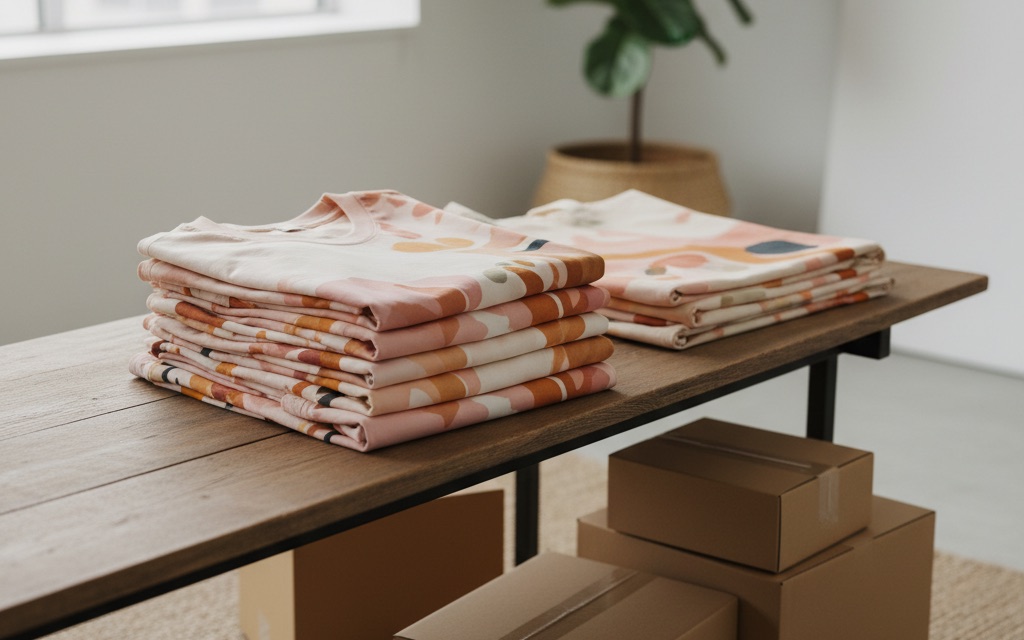
With POD you design a product — a t-shirt, mug, poster, tote — and a partner prints and ships it only when someone buys, so you carry zero inventory and zero risk.
Pair that with Pinterest’s free, buyer-intent search traffic and you’ve got a low-cost little business that can run largely on autopilot.
Here’s the beginner’s playbook.
The core reason this works: Pinterest shoppers are in planning-and-buying mode, searching for gifts, decor and occasions — exactly what POD products serve.
You’re not interrupting anyone; you’re meeting a search.
It’s the same buyer-intent edge I cover for Etsy sellers, applied to made-on-demand products.
Signature product / service$99+
Mini-course or ebook$29
Printable / template$9
Free lead magnet$0
Research designs people actually search for
The whole POD game is picking designs there’s demand for — and Pinterest search tells you.
People rarely search a brand; they search the occasion, identity or interest: “funny nurse gifts”, “cottagecore wall art”, “gift for cat mom”.
Run those through keyword research to find phrases with real demand and beatable competition, then design for them.
Building to a proven search beats designing in a vacuum every time.
Pick the right POD setup
A quick practical note before the fun part: your POD setup should keep the path from pin to purchase short and clean.
Most people run POD through a print partner connected to a storefront — an Etsy shop, a Shopify store, or a dedicated POD marketplace — and simply pin to the product listings there.
Any of these work; pick the one you’ll actually maintain, because a neglected shop with broken links quietly kills sales no matter how good your pins are.
Whatever you choose, make sure the listing page loads fast, looks trustworthy, and matches what the pin promised — Pinterest checks that a pin’s destination delivers, and a clean, relevant page protects your pin health and your reach.
The tech matters far less than the alignment: pin, keyword and product all pointing at the same thing, with nothing broken in between.
Get that right once and you can forget about it and focus on designs.
Niche down to win
Generic designs drown; specific ones sell.
“Dog lover mug” is a war zone, but “dachshund mom coffee mug” has real buyers and far less competition — the classic low-competition long-tail sweet spot.
Pick a clear audience (a hobby, profession, pet, identity) and design specifically for them.
The narrower the person you’re delighting, the more likely they are to buy and share.
A word on the trap that catches new POD sellers: making designs you love instead of designs a specific buyer is searching for.
Your taste is a starting point, not the strategy.
The winners let real Pinterest demand guide what they create — they find a niche audience actively searching, then design exactly for them.
Fall in love with solving a buyer’s want, not with your own idea, and your sell-through rate climbs dramatically.
Data first, art second.
Pin your products so they rank
POD success on Pinterest is Pinterest SEO in disguise.
Show the product in a real-life context (the poster on a styled wall, the shirt worn by a person), put the keyword in the pin title and on the image, and make several fresh designs per product for more shots on goal — the one-into-many-pins approach.
Link each pin straight to the matching product listing so intent flows to checkout.
🏡
Home & Decor
High🍜
Food & Recipes
High👗
Fashion
High💍
Wedding
Med💸
Personal Finance
Rising✈️
Travel
Med🎨
DIY & Crafts
High🧘
Wellness
Rising🍼
Parenting
MedRemember that on Pinterest you’re not limited to promoting one shop or platform — you can point pins at whatever converts best for each design.
That flexibility is part of what makes POD such a forgiving side income: low overhead, no inventory risk, and free evergreen traffic doing the heavy lifting.
Treat each design as a cheap little experiment, and let the ones that sell fund the next batch.
Very few businesses let you test this many ideas for this little money.
Lean hard into gifting and seasons
POD and seasonal Pinterest are a dream team.
Gifts, holidays and occasions drive a huge share of POD sales, and Pinterest planning happens weeks ahead.
Publish your Christmas, Mother’s Day, graduation and “gift for ___” designs 4–6 weeks early using the seasonal strategy, and you’ll be ranking right as the buying rush hits.
Miss the window and you’re fighting for scraps.
Study what’s already selling
You don’t have to guess which designs and niches work — some sellers are already crushing it, and their pins are a public playbook.
Study which POD pins rank for your target searches, note the styles and phrases winning, then do it better with a fresher design and a clearer promise.
That competitor-intelligence shortcut is in find your competitors’ best keywords.
Low risk, high learning
The beauty of POD is you can test dozens of designs for almost nothing — no inventory to eat if one flops. So treat it as experiments: pin many designs, see which searches and styles sell, then pour your energy into the proven winners. Volume of tests plus real data is the whole strategy.
Design for the product AND the pin
POD has a fun double challenge: you’re designing two things — the product itself and the pin that sells it.
The product design needs to appeal to your specific niche (that dachshund mom, that cottagecore fan).
The pin needs to make someone stop scrolling and click: a clean lifestyle mockup showing the product in real life, a bold keyword headline, and a clear sense of who it’s for.
A great design on a weak pin still won’t sell, because nobody ever sees it.
For the product side, work at the size your print partner asks for: the free pixels to inches calculator turns its inches and DPI into the pixels your design needs.
So give each product several fresh pins with different mockups and angles — the mug on a cosy desk, held in hand, on a shelf — each targeting a slightly different search.
This is where the pin design fundamentals matter: contrast, one clear focal point, readable text at thumbnail size.
Treat the pin with as much care as the product and your conversion climbs.
Play the long, patient game
POD on Pinterest rewards patience and volume, not overnight wins.
Because it’s evergreen search traffic, a design might sell nothing for weeks and then quietly sell for years once its pins mature and rank.
So don’t judge a design after three days — give your pins runway, keep testing new designs, and let the winners reveal themselves over a couple of months, exactly the realistic Pinterest timeline.
That patience is actually your edge, because most people quit too early.
Keep planting evergreen designs and pins while everyone else chases quick flips, and six months in you’ve got a catalogue of ranking pins selling on autopilot — a genuine little asset rather than a hustle.
Scale the winners with data
Because POD is a numbers game of testing designs, seeing which pins gain momentum is everything.
Native analytics won’t tell you which designs are climbing or what they rank for — so you’re guessing which to scale.
PinPinterest surfaces the momentum, rank and keyword demand behind your pins, so you double down on the designs that are actually selling and drop the duds.
Combine this with the broader ways to make money on Pinterest and you’ve got a resilient, low-risk income stream.
Find winning POD niches before they saturate
#print on demand#pod#pinterest ecommerce#passive income
More in Monetization3 other guides in this categorySee all Mia Bennett is the pen name the PinPinterest team writes under. Our guides share what we learn building a Pinterest analytics tool — no fluff, just what actually moves traffic.