Are Pinterest Ads Worth It in 2026? An Honest Answer
Are Pinterest ads actually worth it? An honest look at who they work for, who should skip them, realistic returns, and how to know before you spend real money.
By Mia Bennett · PinPinterest editorial team


Let’s cut through the hype in both directions.
Pinterest ads aren’t a magic money printer, and they’re not a waste of time either — the honest answer to “are they worth it?” is: it depends entirely on what you sell, whether your funnel is ready, and how you measure.
So let me give you a straight, no-spin framework to decide before you risk real money.
The foundation, as always: Pinterest is where people plan and shop, so ads work best when you’re selling something people plan or buy.
If that’s you, the odds are good.
For the wider context on how ads fit alongside free reach, Pinterest ads vs organic is the companion piece; this post is purely about whether the paid route earns its keep.
Who Pinterest ads genuinely work for
- Ecommerce and product sellers — buyer intent meets your catalog.
- Bloggers with monetised traffic — cheap clicks feed ad and affiliate income.
- Course, template and digital-product creators — planners search for solutions.
- Local and service businesses reaching people mid-decision.
- Anyone launching something time-sensitive who needs reach now.
If you’re in a planning-heavy niche with something to sell and a page that converts, ads are very likely worth testing.
And if you tick most of those boxes, honestly, I’d be a little excited for you — this is exactly the situation where a modest ad budget can feel less like spending and more like flipping a switch on demand you’ve already earned.
You’re not hoping something works; you’re turning up the volume on something that already does.
That’s a genuinely fun place to be.
Who should probably skip them (for now)
Ads are not for everyone yet.
If you have no offer to send people to, no way to capture the value, or a landing page that doesn’t convert, ads will just spotlight the leak.
Same if your pins are weak or flagged — you’d be paying to amplify a problem.
In those cases, build the organic foundation first; ads amplify what exists, they don’t fix it.
What “worth it” actually means: ROAS
The only real test is return on ad spend.
If you put in $100 and get back more than $100 of value — sales, leads worth a known amount, ad revenue from traffic — the ads are worth it, full stop.
If not, no amount of cheap clicks makes them worth it.
This is why conversion tracking (the Pinterest tag) matters so much: without it, you’re guessing whether you’re profitable.
AdsOrganic
Speed to first click
Ongoing cost
Longevity
Compounds over time
The “worth it” trap I want you to avoid
Here’s a trap I see kind, hardworking people fall into all the time, and it makes me a little sad: they run ads for a week, don’t see instant profit, quietly decide “Pinterest ads don’t work for my business,” and never touch them again.
But that’s not a verdict on ads — it’s a verdict on one under-funded, under-baked week.
It’s like planting seeds, checking the soil three days later, seeing nothing, and declaring gardening a scam.
The honest truth is that the first stretch is almost always research, not riches.
You’re paying to learn which keywords, pins and audiences convert — and that knowledge is the actual asset, because it makes every future campaign sharper and cheaper.
So please don’t judge “worth it” by whether week one printed money.
Judge it by whether, once you’d learned what works and scaled that, the maths came out ahead.
Give it a fair shot before you write the verdict, okay?
The realistic expectation
Set honest expectations: your first campaign is usually research, not profit.
You’re learning which keywords, pins and audiences convert.
Many people “fail” at Pinterest ads because they judge week one and quit — right before the data would have told them what to scale.
Give it enough runway and budget to actually learn, then double down on winners.
The compounding comes after the learning.
Before you start, the free CPM calculator shows roughly what a test budget buys in impressions and clicks.
The uncomfortable question I make people answer
Whenever a friend asks me “should I run Pinterest ads?”, I annoy them by answering with a question of my own: does the traffic you already get convert?
Because here’s the thing nobody wants to hear — if a hundred free visitors a month aren’t buying, signing up, or doing anything, then paying to send a thousand more won’t magically fix that.
It’ll just make the leak louder and pricier.
Ads are a magnifying glass; they make whatever’s already there bigger, flaws and all.
So before you spend, be honest with yourself about the thing the ad points to.
Is the offer something people genuinely want?
Does the page load fast and deliver on the pin’s promise?
Do you capture the ones who aren’t ready to buy today, maybe with an email freebie?
If you can answer yes, ads are probably worth it.
If you flinched at any of those, that flinch is your answer — fix that first, and you’ll thank yourself.
What “worth it” looked like for people I know
To make this concrete: the folks I’ve seen genuinely win with Pinterest ads almost always had a specific, wanted thing to sell and a page that already converted a trickle of organic traffic.
A maker with a tidy Etsy shop.
A blogger whose posts earned real ad and affiliate income per visit.
A course creator with a proven free-to-paid path.
For them, ads were like turning up the volume on a song people already liked.
The ones who felt burned?
Almost always promoting something unproven — a brand-new shop with no reviews, a page that didn’t convert, or pins that were quietly flagged.
Same platform, opposite experience, and the difference was never “do ads work” — it was “was there something worth amplifying yet.”
That’s genuinely the whole ballgame.
How ads and organic feed each other
Here’s the part that tips “worth it” in your favour: ads and organic aren’t rivals.
A promoted pin keeps earning organic reach afterward, and the data from ads tells you which keywords and pins to double down on organically.
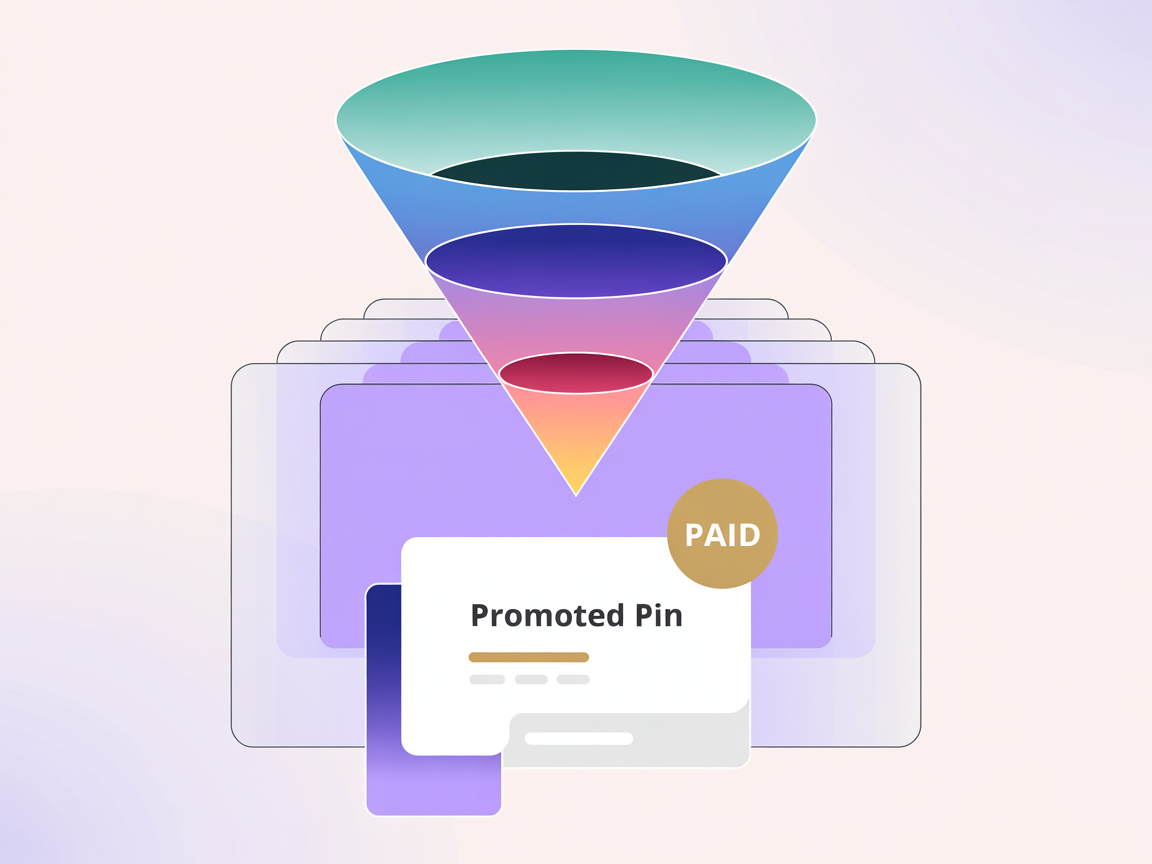
Run them together and each makes the other more efficient — which is the whole funnel view in the complete ads guide.
Seen in search & feeds
Clicked through to you
Joined your list
Bought or booked
The pre-flight check
Before spending a cent, answer two questions honestly: do I have an offer people actually want, and does my page convert the traffic it already gets? Two yeses mean ads are probably worth testing. A no on either means fix that first — ads will only make a leaky funnel leak faster.
Know before you spend
The smartest way to make ads “worth it” is to remove the guesswork before you pay: promote only keywords with real demand and pins with proven momentum, and make sure nothing’s being throttled.
Native analytics won’t show you that; PinPinterest will — so you spend on validated winners instead of hope.
Do that, and Pinterest ads shift from a gamble to a genuinely worthwhile lever.
Next, keep costs sane with how much Pinterest ads cost.
Validate demand before you spend on ads
#pinterest ads worth it#pinterest advertising roi#pinterest ads review#paid pinterest
More in Ads8 other guides in this categorySee all Mia Bennett is the pen name the PinPinterest team writes under. Our guides share what we learn building a Pinterest analytics tool — no fluff, just what actually moves traffic.