Pinterest Ads: The Complete 2026 Guide for Beginners
Everything you need to start with Pinterest ads in 2026 — how they work, the formats, targeting, costs and campaign types, plus how to spend without wasting a cent.
By Mia Bennett · PinPinterest editorial team

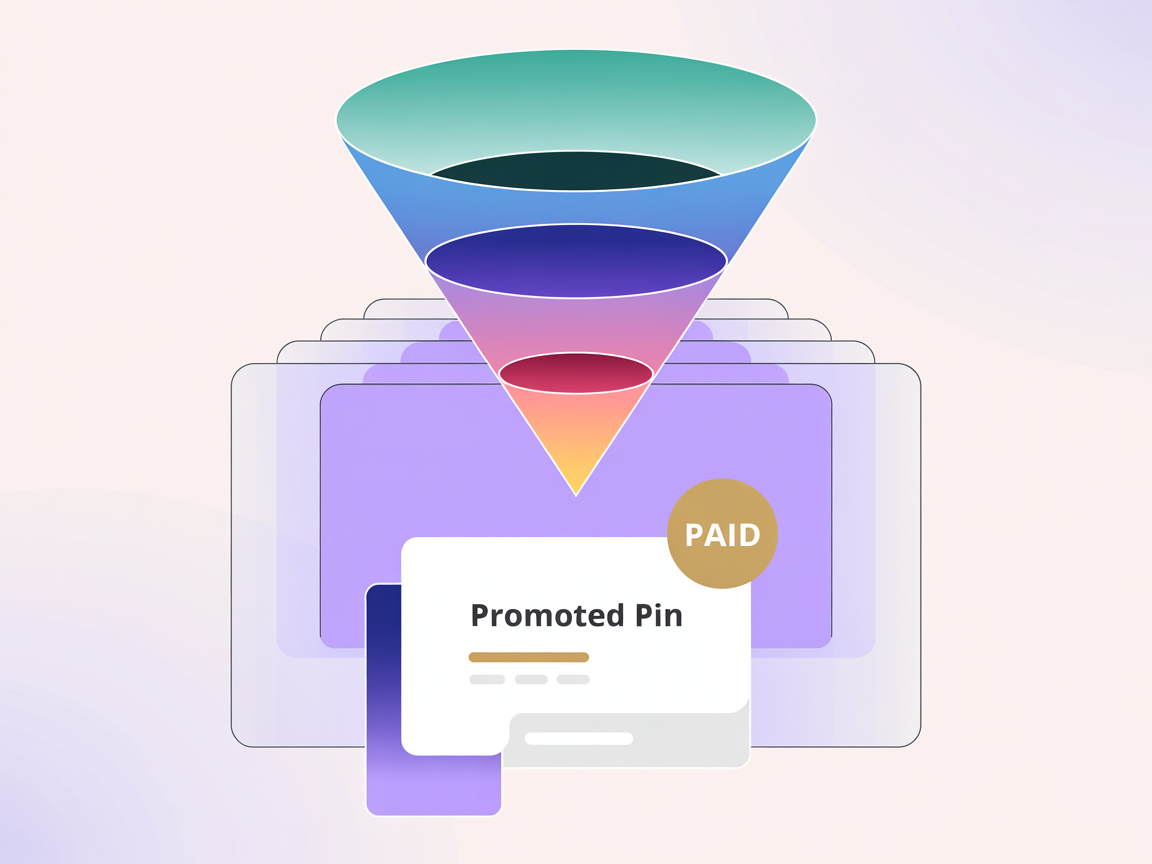
Pinterest ads are one of the most underrated corners of paid advertising — cheaper clicks than most platforms, buyers who are actively planning purchases, and pins that can keep working long after your campaign ends.
But they’re also easy to get wrong and quietly waste money on.
So this is the complete beginner’s guide: how Pinterest ads actually work, the formats and targeting, what they cost, and how to spend so every dollar earns its keep.
One idea to anchor everything: Pinterest is a search-and-planning engine, not a distraction feed.
People are there looking for ideas to act on, which is why ads that help them plan tend to outperform ads that interrupt them.
Everything below builds on that.
If you’re still deciding whether to pay at all, start with Pinterest ads vs organic reach — this guide assumes you want to give ads a real shot.
Awareness — reach & video views
Consideration — clicks & traffic
Conversions — sales & signups
Catalog sales — shopping ads
How Pinterest ads actually work
A Pinterest ad is really just a pin you pay to show to more of the right people.
You create a campaign, choose an objective (like traffic or conversions), set a budget, pick who should see it, and attach your best pins.
Pinterest then places those pins in search results and feeds, labelled “Promoted”, in front of people whose behaviour matches your targeting.
You’re charged based on the objective — per click, per thousand impressions, or per action.
Why Pinterest ads are worth a look
- Buyer intent — people are actively planning and shopping, not just scrolling.
- Often-cheaper clicks than saturated platforms, especially in visual niches.
- Evergreen spillover — a promoted pin keeps earning organic reach afterward.
- A level field — you can test small and scale only what works.
That combination is why even a modest budget can go a long way here, particularly for home, food, fashion, wedding and other planning-heavy niches.
The campaign objectives (choose one)
Your objective is the single most important setting, because it tells Pinterest who to optimise for.
Awareness objectives (reach, video views) get you seen cheaply.
Consideration objectives (traffic) drive clicks to your site — the workhorse for most bloggers and shops.
Conversion objectives (conversions, catalog sales) optimise for actual sales or signups, and need Pinterest’s tracking tag installed.
Beginners almost always start with a traffic objective.
The ad formats at a glance
Pinterest offers several ad formats, and picking the right one matters as much as the targeting.
Standard pins for clicks, video for reach, carousels to show multiple angles, shopping ads to sell products from a catalog, and collections for a shoppable lifestyle look.
I break down exactly when to use each in Pinterest ad formats explained.
1Pick an objective (traffic, conversions, awareness)
2Set budget & schedule
3Choose targeting (keywords, interests, audiences)
4Add your best-performing pins
5Launch, then optimise on the data
Targeting: getting in front of the right people
Pinterest lets you layer targeting: keywords (catch people mid-search — the most intent-rich option), interests (topics people love), audiences (retarget your visitors or reach lookalikes), and demographics.
Keyword targeting is a Pinterest superpower because it taps the same search intent your organic keyword research already uncovers.
The full playbook is in Pinterest ad targeting.
What Pinterest ads cost
You control the spend entirely — set a daily budget as low as a few dollars and Pinterest never exceeds it.
Costs vary by objective and competition, but clicks are often cheaper than on other platforms.
I dig into real ranges and how to keep costs down in how much Pinterest ads cost.
The golden rule: start small, treat the first week as paid research, and scale only the winners.
The free CPM calculator shows what a budget buys at the published Pinterest price ranges.
Set up your first campaign
Once you understand the pieces, launching is straightforward — a business account, the objective, a budget, targeting, and your pins.
I walk through it click-by-click in how to set up your first Pinterest ad, including the pixel/tag setup that unlocks conversion tracking.
The one rule that saves your budget
Never promote a pin that isn’t already working.
Ads amplify — so amplifying a pin with weak keywords, a bad landing page, or a hidden health flag just burns money faster.
The smartest move is to let your organic pins prove themselves first, then pour budget behind the ones already earning saves and clicks.
That’s where knowing your real numbers matters.
Promote proven winners, not hopefuls
The people who profit from Pinterest ads don’t gamble on new pins — they find the pins already gaining organic momentum and amplify those. Get the fundamentals right first: real keywords, a clean landing page, healthy pins. Then ads accelerate something that already works.
Confession: my first campaign was a mess
Let me be honest with you, because I think it’ll save you some money.
The first Pinterest ad I ever ran, I did almost everything wrong.
I made a brand-new pin especially for the ad (untested — no idea if anyone even liked it), targeted the broadest possible audience because it felt “safe”, and then I checked the dashboard obsessively for two days, panicked at the numbers, and turned it off before it had learned a thing.
I basically paid Pinterest for the privilege of confusing myself.
What finally clicked for me was embarrassingly simple: stop treating ads like a slot machine and start treating them like a spotlight.
A spotlight only helps if you point it at something already worth looking at.
The moment I began promoting pins that were already quietly getting saves organically — and left the campaigns alone long enough to actually learn — everything changed.
Same budget, wildly different results.
So please, learn from my flailing and skip that whole phase.
Is this even for you right now?
Here’s a bit of tough love I wish someone had given me: ads aren’t the first thing you should reach for, they’re an amplifier for something that already works.
If you don’t yet have an offer people want, a page that converts the free traffic it already gets, and a few pins with genuine momentum, then honestly?
Put the credit card away for now.
Spend a few more weeks getting the organic basics right — it’s all in the 90-day marketing strategy — and come back when you’ve got something worth amplifying.
But if you do have that foundation — a real offer, a decent page, some pins earning saves — then ads can genuinely pour fuel on the fire, faster than waiting months for organic alone.
That’s the sweet spot this whole guide is written for.
No hype, no “get rich” nonsense; just a calm way to turn a working thing into a bigger working thing.
Avoid the common money-wasters
Most wasted ad spend comes from a short list of avoidable mistakes — vague targeting, judging by impressions, no conversion tracking, promoting duds.
I collected the big ones in 9 Pinterest ads mistakes that waste your budget, and if you’re weighing platforms, Pinterest ads vs Facebook ads will help you decide where your money works hardest.
Where a tool gives you the edge
The difference between profitable ads and expensive guesses is data: which keywords have real demand, which pins already have momentum, and whether anything’s being throttled.
Native analytics hides most of that, which is exactly why I lean on PinPinterest — to find the proven keywords and pins worth putting money behind before I spend a cent.
Do that, and Pinterest ads stop being a gamble and start being a lever.
Find the keywords and pins worth promoting — before you spend
Ready to monetise the traffic ads send you?
#pinterest ads#pinterest advertising#promoted pins#paid pinterest
More in Ads8 other guides in this categorySee all Mia Bennett is the pen name the PinPinterest team writes under. Our guides share what we learn building a Pinterest analytics tool — no fluff, just what actually moves traffic.