Can People See What You Pin, Save and Follow? Yes — More Than You Think
Saving is a public act. Following is visible. Your board list, your followers and who you follow are all open. What stays genuinely quiet is a much shorter list than most people assume — here is both, without the alarmism.
By Mia Bennett · PinPinterest editorial team

Most people use Pinterest as though it were a private scrapbook, and it is not one.
It is a public search engine with your name on the front of it, and saving a pin is closer to posting something than to bookmarking it.
That is not a scandal and I am not going to write it like one.
Nothing here is hidden or sneaky, it is all in plain sight, and the reason it surprises people is simply that the feeling of using Pinterest — quiet, solitary, slightly indulgent — does not match what is actually happening.
So here is the accurate version: what a stranger can see, what a follower can see, what somebody who knows your name can piece together, and the short list of things nobody sees at all.
Strangers
Followers
Nobody
Saving a pin
Following a board
Your board list
Commenting
Searching
Just looking
Hiding a pin
Above the dashed line you are filing. Below it you are only looking. That is the whole rule.
What a complete stranger can see
If somebody finds your profile — from a pin, from a search, from a link — they can see your name and photo, your bio, your board list, every pin on every public board, how many followers you have, who those followers are, and who you follow.
That last one catches people out more than anything else.
Following is not a private preference on Pinterest, it is a public act, and your list of followed accounts and boards is browsable by anyone.
It is a surprisingly informative list — considerably more revealing about a person than the things they have saved, because saves are aspirational and follows are habitual.
They cannot see when you saved something, what you searched for, what you looked at without saving, or anything on a secret board.
The thing that is public and should not surprise you
Pinterest is a search engine. Everything you file is inventory for it, which is why it is public by default rather than by decision — a private pin would be an empty shelf. That is not a defence of the design so much as the reason it could never plausibly work the other way round.
There is one more thing in this bracket worth flagging because people assume the opposite: comments you leave on other people’s pins are public, attached to your profile, and outlive whatever conversation prompted them.
Comments are rare enough on Pinterest that most people never think about them, and they are the only part of your activity that appears on somebody else’s page rather than your own.
What a follower sees that a stranger does not
Timing, essentially.
Your saves can surface in your followers’ home feeds, which means the people following you may see what you save roughly as you save it, in among everything else they are shown.
It is worth being realistic about how loud this is.
The home feed is algorithmic and crowded, and your saves compete with everything Pinterest would rather show.
A follower is not getting a notification every time you pin something.
But “can appear in a stranger’s feed within the hour” is the honest description, and it is a different mental model from “stored on my profile where somebody might one day look”.
1
You tap save
no confirmation, no audience prompt
2
It lands on a board
public unless you chose otherwise
3
Followers become eligible
it enters their feed candidates
4
It can appear within the hour
among everything else they are shown
This is the single most useful thing to internalise if you use one account for both work and yourself.
Not because anything embarrassing is likely, but because a professional account that saves forty things about bathroom tiles on a Tuesday afternoon is telling a story to the exact people it was built to impress.
What somebody who knows your name can put together
This is the layer people underestimate, and it is not about any single setting — it is about the combination.
Your board titles describe your interests.
Your follows describe your habits.
Your bio and profile photo often carry your real name and location.
If your Pinterest profile is indexed, all of that is reachable from a search for your name — and whether it is indexed comes down to one switch most people have never looked at, which is the post to read if that sentence made you uncomfortable.

I want to keep this proportionate.
In practice, almost nobody is going through your boards.
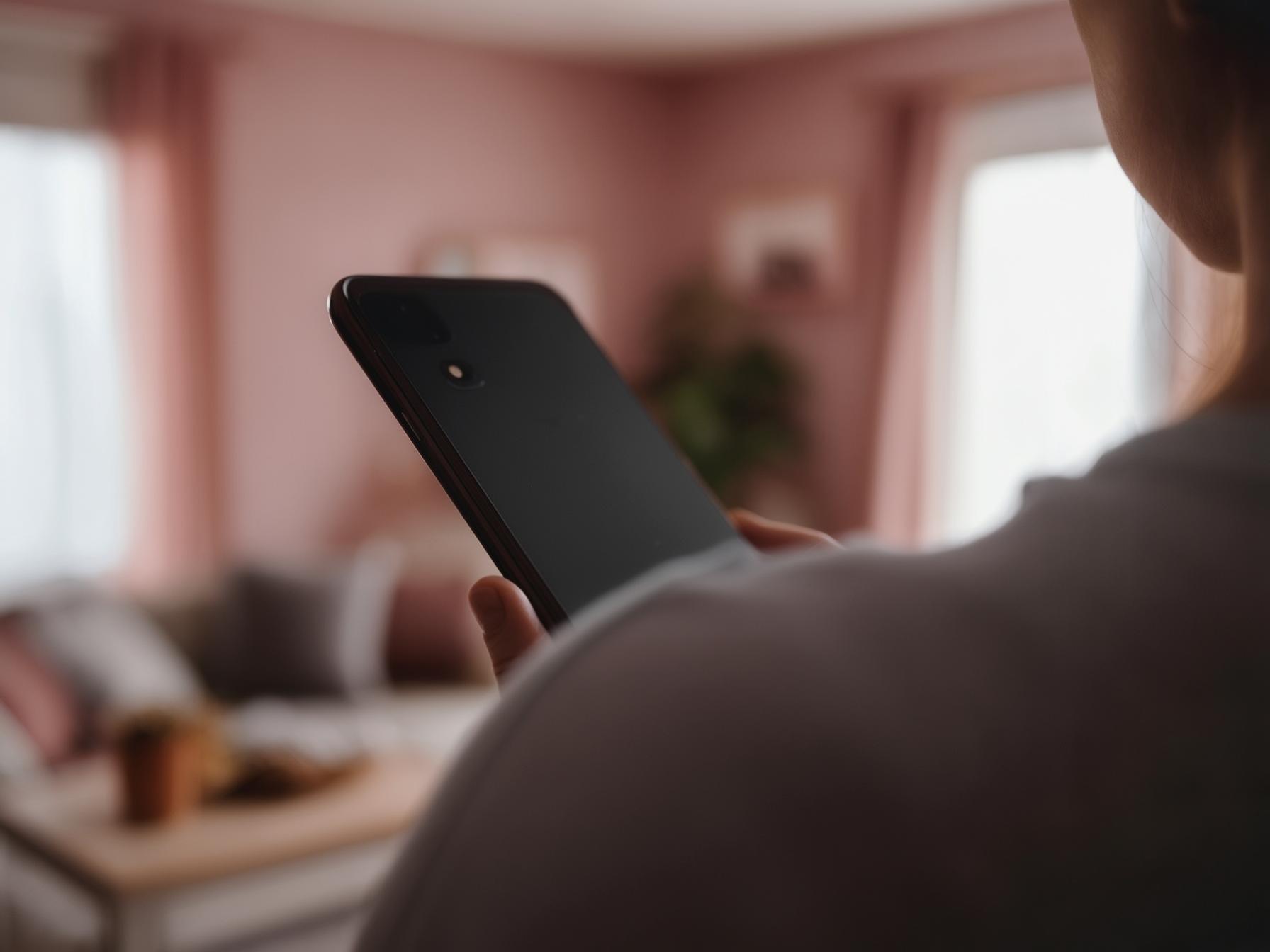
The realistic audience for your Pinterest activity is people who already know you and happen to look — which is why the sofa in that photograph is a more honest threat model than anything involving search engines.
The exception, and the reason I bothered writing this section at all, is when your name is the business.
Freelancers, consultants, anyone who gets hired by people who look them up first.
In that situation a stranger genuinely is going through your profile before a call, and they are reading it the way people read anything they have just found: quickly, and for signals about whether you are any good.
A board list that makes no sense is not a privacy problem, it is a first impression, and it is being formed by somebody you will never get to explain it to.
What is genuinely quiet
A short list, and a reassuring one:
- What you search for. Nobody sees your searches, ever.
- What you look at without saving. Viewing is silent, which is most of what anybody does on Pinterest.
- Anything on a secret board — with four specific exceptions worth knowing about, all of which involve people you invited.
- Which pins you have hidden or reported, and the tuning you do on your own feed.
- The exact time you saved something. The pin surfaces; the timestamp is not published on your profile.
Your searches
Never shown to anyone, in any form.
Looking without saving
Silent, and it is most of what anyone does.
Feed tuning
Hiding and reporting stays between you and the algorithm.
All three are consumption. Nothing you FILE appears on this list, and nothing ever will.
There is a clean rule underneath that list, and once you have it you never need to look anything up again: consuming is private, filing is public.
Looking, searching, scrolling and reading are yours.
The moment you put something somewhere — a board, a follow, a comment — it becomes part of a public profile.
What I would actually change
Three things, in the order I would do them, and the whole lot takes about ten minutes.
- Look at your follows. It is the most revealing public list on your account and the one nobody ever audits. Unfollow anything that no longer represents you — it also visibly improves your home feed, so this is the rare privacy step with an immediate upside. The free block or report on Pinterest tool has Pinterest’s steps for unfollowing, and for blocking anyone you would rather could not follow you.
- Look at your board titles as a stranger would read them, not as you meant them. A board called “ideas” means nothing to anyone; a board called “new flat 2027” tells somebody where you are moving. Board naming and structure is worth a proper pass anyway if you have never done one.
- Decide whether one account is doing two jobs. If your professional saving and your personal saving are on the same profile, the fix is a second account rather than more caution — and the personal-versus-business distinction is worth understanding before you set one up.
What I would not do is go on a deleting spree.
Cleaning out a public board removes your own history and does not remove anybody else’s copy of the pins, so the effort mostly buys a feeling.
Moving a board to secret is a better move if you genuinely want it gone from view, and it is instant.
The version of this that matters commercially
If you are using Pinterest to bring people to a website, flip this whole post around: the visibility is the product.
You want your boards to be readable by strangers, your follows to make sense, and your profile to say clearly what you are about — because that is how a person who has never heard of you decides whether to follow the link.
Read your own profile as a stranger once a quarter.
It is uncomfortable and it takes five minutes, and it is the same instinct as reading your own pin titles as somebody who does not already know what you meant — the subject of how people find things here at all if you want the broader picture.
And once the profile reads clearly, the question stops being who can see it and starts being whether you are making things anybody was looking for.
That is the harder question and the one worth the time, which is exactly what PinPinterest is for — the difference between a tidy profile nobody visits and one that quietly does its job.
Make a profile that reads well to strangers — and gives them a reason to click
For the whole picture in one place, the complete map of who can see what covers the settings this post only touches.
#pinterest privacy#activity visibility#followers#saves
More in Privacy6 other guides in this categorySee all Mia Bennett is the pen name the PinPinterest team writes under. Our guides share what we learn building a Pinterest analytics tool — no fluff, just what actually moves traffic.