Are Pinterest Secret Boards Really Private? Mostly — Here Are the Four Leaks
Your followers cannot see a secret board, it stays off your profile, and it does not turn up in search. All true. Here are the four ways it leaks anyway, and the one cost nobody mentions.
By Mia Bennett · PinPinterest editorial team

The honest headline first, because this is a question people ask when they are slightly anxious and I am not going to bury it under six paragraphs of throat-clearing: yes, secret boards are genuinely private from other users.
Your followers cannot see one.
It does not appear on your profile.
It does not turn up in Pinterest search, and it does not turn up in Google.
Somebody who knows your username and goes looking will find nothing.
So the folklore that “secret boards are not really secret” is wrong, and I want to say that clearly before I spend the rest of this post on the four ways they leak anyway — because all four are about people you invited or devices you share, not about Pinterest quietly showing your business to strangers.
A follower
Nothing
Someone with your username
Nothing
Google
Nothing
Pinterest search
Nothing
A collaborator you invited
Everything, forever
Four rows of nothing, and one row that is the entire risk. Guess which one people worry about.
Leak one: collaborators see everything, including what you add later
This is the big one, and it is responsible for more awkward moments than the other three combined.
If you invite somebody to a secret board, they can see all of it.
Not just the pins that were there when you invited them — everything you add afterwards, indefinitely, until you remove them.
There is no “they can see these forty and not the next forty” setting, because that is not what a shared board is.
The reason this bites is that secret boards are exactly where collaborative planning happens.
A wedding, a house move, a surprise party, a client project.
You invite four people in March, the project ends in June, and in November you are still adding things to a board that four people can technically still open.
I found this out on a board called “house stuff” that had been a shared planning space with a friend for about six weeks in 2023 and had quietly become my personal filing cabinet for everything I liked and could not afford.
She had not looked once.
She almost certainly never would have.
That is not really the point — the point is that I had been treating a two-person board as a one-person board for the better part of a year without ever making a decision to do so, and the moment I noticed was not a comfortable one.
The five-minute habit worth having
When a shared project ends, remove the collaborators the same week. Not because anybody is snooping — almost nobody is — but because “who can see this” should be a fact you know rather than a list you have not looked at since March. It is the single most common finding in a privacy audit.
Leak two: moving a pin out makes it public, immediately
A pin sitting on a secret board is invisible.
Move that same pin to a public board and it is simply a public pin, at once, with no warning and no confirmation step.
This catches people during a tidy-up.
You are reorganising, you drag a batch across, and a handful of things you had filed away deliberately are now on your profile.
Nothing has malfunctioned — you asked for exactly that — but the interface makes it a two-second action with no friction proportional to the consequence.
The same applies in reverse and it is worth knowing: moving a public pin into a secret board hides it going forward, but it does not retract anything.
If somebody already saved it, their copy is theirs.
Reorganising boards is covered properly in the guide to board structure, and the honest summary is that moving pins is safe as long as you look at where they are going.
A collaborator, still invited
Sees everything you add later, until removed. The most common finding by a distance.
A pin moved to a public board
Public instantly, no confirmation step, during an ordinary tidy-up.
Your own home feed
Pinterest reads secret saves to pick what to show you. The feed can give away the board.
A shared, logged-in device
One tap from the profile. Far likelier than anything sophisticated.
Every one of these is a person you invited or a screen you share. None of them is Pinterest leaking to strangers.
Leak three: secret is secret from users, not from Pinterest
Pinterest can see your secret boards.
Obviously, when you say it out loud — the pins are on their servers, their systems index them, and their recommendation engine uses what you save to decide what to show you.
That last part has a visible consequence people find unsettling without knowing why.
Save forty things about a surprise trip to a secret board, and your home feed will start showing you that trip.
If somebody else uses your laptop, the secret board stayed secret and the feed gave it away entirely.
This is not a privacy failure in any meaningful sense.
It is the product working as designed, and if it did not work that way the feed would be useless.
But “secret from other users” and “not used to shape what you see” are two different promises, and only the first one was ever made.
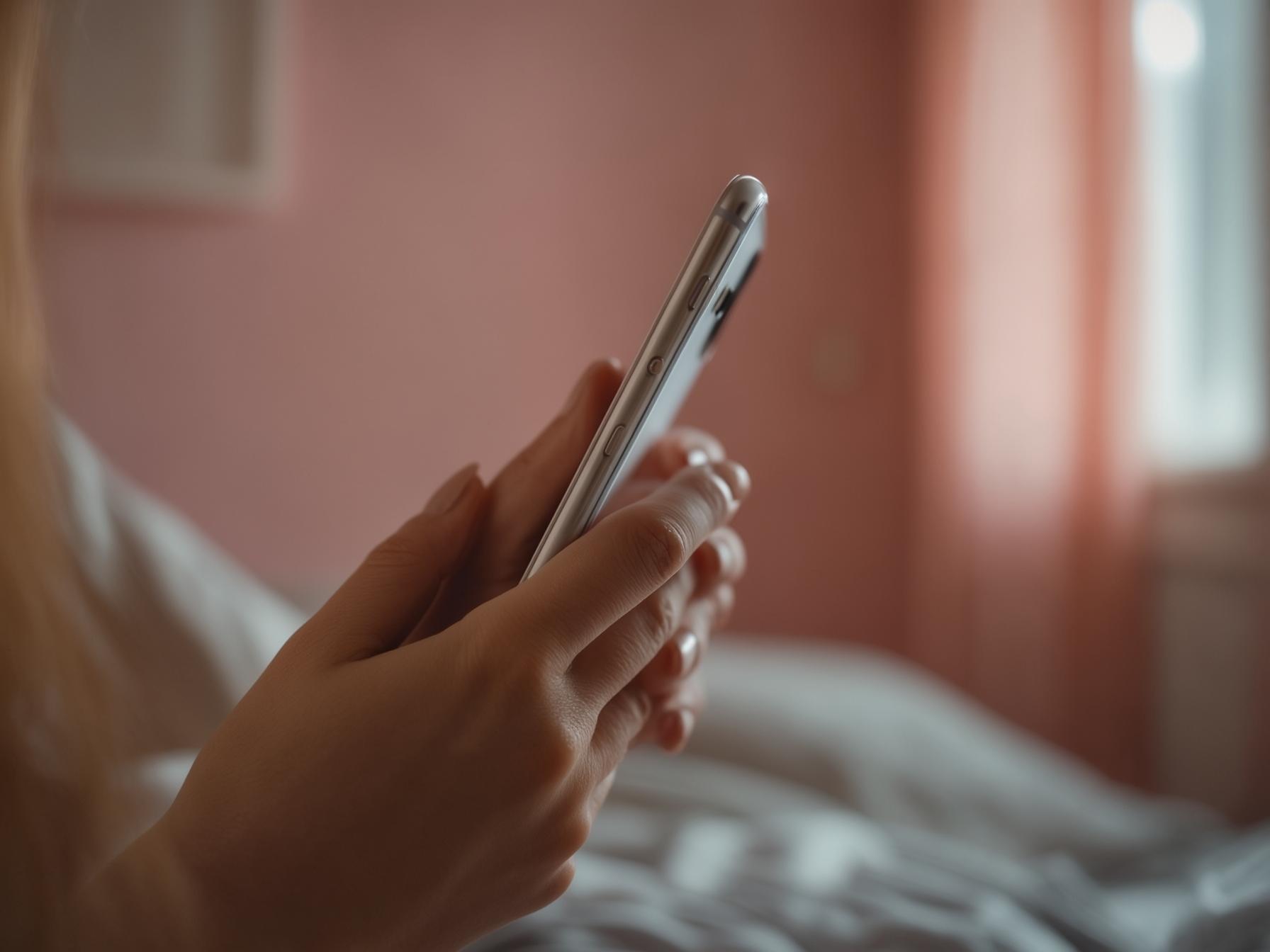
Leak four: the shared device, which is not a Pinterest problem at all
A logged-in account on a shared laptop, a tablet the family uses, a phone somebody borrows to look something up.
Secret boards are one tap from the profile of whoever is logged in.
I include this not because it is clever but because it is, by a distance, the most likely way anybody ever sees a secret board of yours.
The sophisticated threats people worry about are hypothetical.
Your sister picking up your iPad is not.
The cost nobody mentions
Here is the part that matters if you use Pinterest for anything beyond personal collecting, and it is the reason I would not use secret boards as a general-purpose filing system.
A pin on a secret board gets no distribution.
None.
It is not shown to anyone, it cannot be saved by anyone, it does not appear in search, and it accumulates nothing.
It is a private bookmark in a system built for public discovery.
Public board
shown, searched, saved
Public board, no keywords
shown to fewer
Archived board
existing pins still live
Secret board
nothing, to anyone
Not “less reach”. No reach. A secret board is a private bookmark inside a discovery engine.
That sounds obvious written down, and yet a genuinely common self-inflicted wound is drafting pins on a secret board “until they are ready”, then never moving them — or moving them months later, at which point they are just old.
If your pins are not being seen and you are not sure why, it is worth checking that they are actually on a public board before working through the longer list of reasons a pin gets no impressions.
What secret boards are genuinely good for
I use exactly three, and I think that is about the right number:
- Gifts and surprises. The original use case and still the best one — as long as you remember leak three, and do not plan a surprise on the shared iPad.
- Research that would embarrass your public profile. Client work in a niche that is not yours, competitor analysis, a house you are not going to buy. Keeping it off your profile also keeps your public boards coherent, which matters more than people think.
- Anything genuinely personal. Health, money, a difficult year. Pinterest is a search engine with your name on it, and some things do not belong on one.
What they are not for is drafts, or overflow, or “I will sort this later”.
For overflow you want board sections, which keep things tidy without hiding them, and for the general question of how many boards is sensible there is a whole post on the limits.
If you are not sure what to call them, the free board sections planner suggests plain names for each board.
The check I would actually do
Open your secret boards and look at the collaborator list on each one.
That is it.
Ninety per cent of what could ever go wrong here is somebody who was added for a reason that finished a long time ago.
If you want the fuller picture — profile, follows, search visibility and the rest — the complete map of who can see what covers the parts that are public without anybody choosing to make them so, which is a bigger category than most people expect.
And if you are hiding boards because your public profile has drifted into a mess you would rather nobody read, the fix is not more secrecy.
It is deciding what the account is actually about and building around topics people are looking for — which is the job PinPinterest exists to make straightforward, and a much better outcome than a profile you have to keep apologising for.
Build a profile you are happy for people to find
Next, if you want the how-to rather than the is-it-safe: making and managing secret boards covers the mechanics properly — and if what you actually wanted was a board off your profile without losing its reach, secret is probably the wrong one of the four options.
#secret boards#pinterest privacy#board settings#visibility
More in Privacy6 other guides in this categorySee all Mia Bennett is the pen name the PinPinterest team writes under. Our guides share what we learn building a Pinterest analytics tool — no fluff, just what actually moves traffic.