How Many Pinterest Boards Should You Have?
There’s no magic number — but there is a right range for your stage. Here’s how many boards to run, when to add more, and when to merge or archive.
By Mia Bennett · PinPinterest editorial team


This question comes up constantly and it usually arrives with a hopeful edge, as though there is a specific number that unlocks growth.
There is not.
But there is a sensible range for your stage, and — more usefully — there are clear signals telling you when you have too few and when you have too many.
That is what I actually want to give you here.
The short answer: start with five to eight, grow to roughly ten to twenty as you build content, and settle somewhere in the twenty-to-forty range for a mature account in a broad niche.
But the number matters far less than what is inside them, which is the part people skip past on the way to the number.
So let me explain the reasoning behind that range, the symptoms of getting it wrong in either direction, and how to decide when a new board is genuinely warranted.
Brand new
5–8 boards
Growing
10–20 boards
Established
20–40 boards
Start small: five to eight boards
A new account should start with a handful of boards it can genuinely fill.
Five to eight tightly themed boards, each with a real keyword name and description, gives Pinterest a clear picture of your niche without spreading your early pins impossibly thin.
The temptation is to create thirty boards on day one because it feels like progress and the account looks impressively full.
It is a trap.
Thirty boards with four pins each looks abandoned to a visitor and gives Pinterest a very weak signal on every topic.
Five boards with forty good pins each looks like a resource worth following, which is what you actually want (setup guide).
Grow with your content, not ahead of it
The healthy rule is that boards follow content.
When you have enough pins on a sub-topic that it is genuinely crowding its parent board, that is the moment to give it a board of its own.
Creating a board first and hoping to fill it later usually results in a skeleton sitting on your profile for months.
This keeps your account looking consistently substantial as it grows, rather than going through an awkward phase where it is mostly empty containers.
It also means every board you create is backed by demonstrated content output rather than optimism about your future self.
Signs you have too few
Too few boards shows up as boards that have become unfocused catch-alls.
If a single board contains chicken recipes, desserts, meal prep and cocktails, it has stopped being a topic and become a pile — and Pinterest struggles to categorise a pile.
- A board covering several genuinely different search topics at once.
- You hesitate about which board a new pin belongs on, because none really fit.
- A board has grown so large it is unbrowsable (consider sections too; the free board sections planner says which boards are big enough to need them).
- You are ranking for nothing specific because every signal is diluted.
Signs you have too many
The opposite problem is more common among enthusiastic accounts.
Symptoms: lots of boards with only a handful of pins, several boards that overlap so heavily you cannot remember which is which, and boards you created for a passing idea and never revisited.
The cost here is real but subtle.
Thin, overlapping boards dilute your topical clarity, make your profile look neglected, and split what could have been one strong board into three weak ones.
If two boards would return nearly identical pins to a visitor, they should almost certainly be one board.
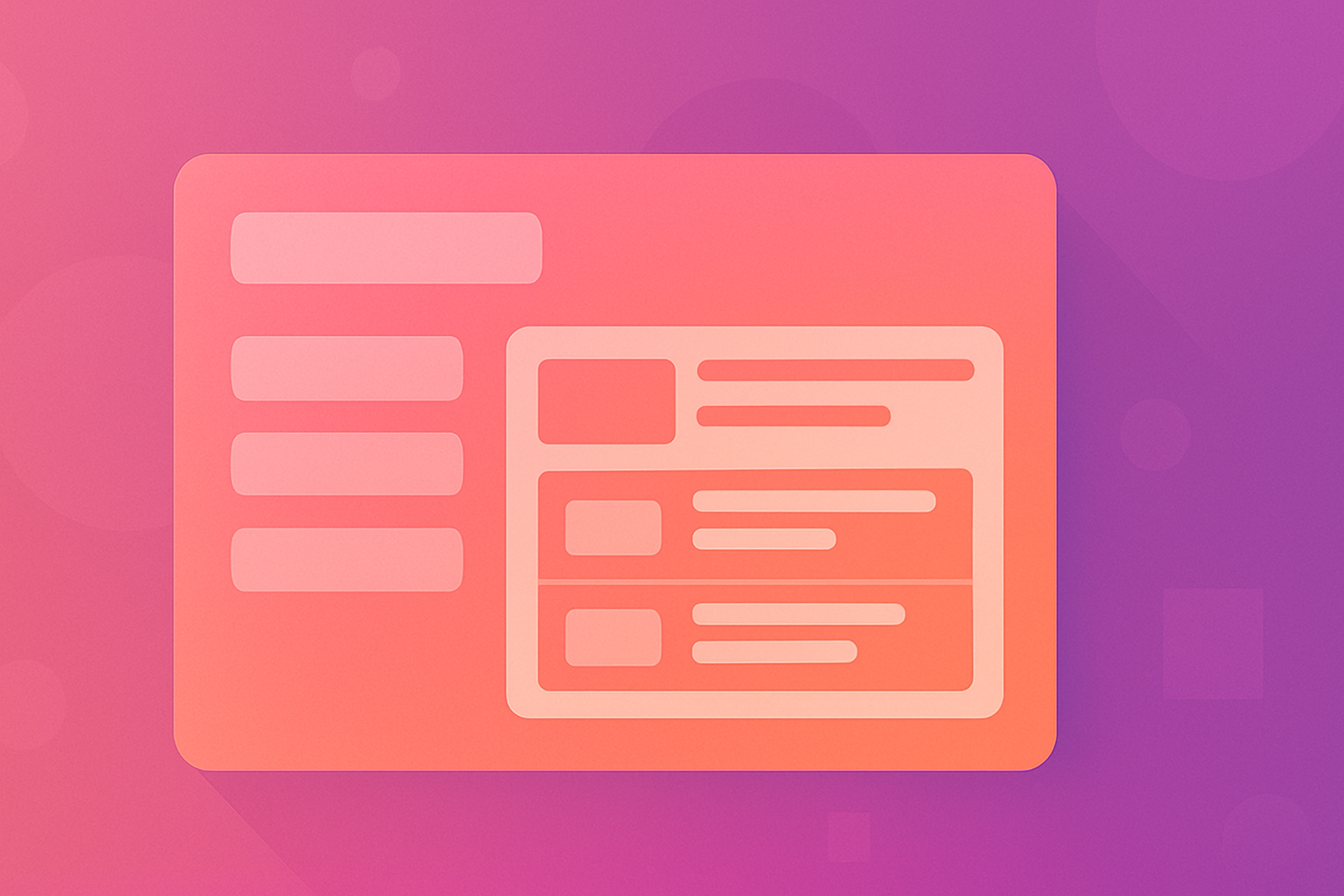
Your profile (one clear niche)
Board: Dinners
Section
Section
Board: Meal Prep
Section
Section
Board: Desserts
Section
Section
The test for adding a new board
Before creating a board, run it past three questions.
First: is this a topic people genuinely search for as its own thing, or just a slice of an existing board?
Second: do I have — or will I realistically produce within a month — enough pins to fill it properly?
Third: does it clearly belong to my niche, or am I drifting?
Three yeses and you should create it.
Any no and it is probably a section, a secret board, or an idea to revisit later.
That small bit of discipline is what keeps an account from sprawling into forty half-hearted boards over a couple of years.
Full beats numerous
Ten well-stocked, tightly themed, properly named boards will outperform forty thin ones every single time. If you are unsure whether to add another board, the answer is almost always to strengthen an existing one instead. Depth reads as authority; sprawl reads as noise.
Does a high board count ever hurt you?
Directly, no — Pinterest does not penalise you for having many boards, and there is no threshold that triggers a downgrade.
Plenty of large, successful accounts run forty or more boards perfectly happily, because their niche is genuinely broad enough to support that many distinct topics.
Indirectly, though, a bloated board set causes real problems.
It dilutes your topical clarity when the boards overlap heavily, it makes your profile harder to navigate, and it usually correlates with thin boards that look neglected.
The harm comes from the thinness and the blur, not the number itself — which is why forty well-stocked boards is fine and fifteen half-empty overlapping ones is not.
The practical implication: stop counting and start assessing.
Instead of asking whether forty is too many, ask whether every one of your boards has a distinct topic, a decent volume of pins, and a name someone would actually search.
Boards that fail that test are the problem regardless of how many you have.
Quality checks worth running quarterly
Rather than obsessing over the count, run a short quarterly review.
It takes about fifteen minutes and keeps an account from drifting into sprawl without you noticing.
- Any board with fewer than ~20 pins — fill it, merge it, or archive it.
- Any two boards that would return near-identical pins — merge them.
- Any board with a cute or vague name — rename it (board names).
- Any board with an empty description — write two sentences (descriptions).
- Any off-topic leftover — archive or make it secret.
Working that list quarterly keeps your structure genuinely tight without ever needing to make a big dramatic reorganisation.
Small consistent maintenance beats an annual overhaul you dread and postpone.
What to do with the boards you regret
Most established accounts have a few boards that no longer fit — leftovers from a previous direction, or personal collections from before the account got serious.
You have three good options: merge it into a related board, rename and repurpose it if the pins are salvageable, or archive it.
Archiving is underrated.
It removes the board from your public profile without deleting anything, so your topic signal cleans up immediately and nothing is lost.
For a genuinely off-topic personal board, archiving (or making it secret) is usually the right call.
Let demand decide, not a target number
The genuinely useful reframe is to stop asking “how many boards should I have?” and start asking “which topics in my niche have enough real demand to deserve a board?”
That question has an evidence-based answer, whereas the first one only ever has an arbitrary one.
Checking real demand data and competition for each candidate topic turns board planning from a guessing game into a sorted list — which is exactly what PinPinterest provides.
Build a board for every topic with verified demand you can genuinely serve, and the right number reveals itself naturally.
Find the topics that genuinely deserve their own board
Related: board ideas by niche, board sections and the complete boards guide.
#pinterest boards#account structure#boards#strategy
More in Boards15 other guides in this categorySee all Mia Bennett is the pen name the PinPinterest team writes under. Our guides share what we learn building a Pinterest analytics tool — no fluff, just what actually moves traffic.